








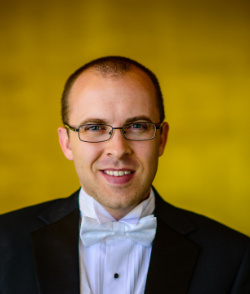
Photo credit: Scott Jarvie
This past year has tested our resolve as union musicians. We have watched unlawful interference with the institutions that protect working people, like the illegal removal of NLRB Commissioner Gwynne Wilcox (leaving the agency without a quorum) to the gutting of the Federal Mediation and Conciliation Service, and executive actions aimed at ending collective bargaining for more than a million federal employees. When agencies like the VA and EPA notified employees that their contracts were terminated via executive order from the president, the message was clear: politics can subvert labor law, and every union is at risk.
Our response must be equally clear. There was a time before the National Labor Relations Act when workers used tactics the law now prohibits. We gave up those tactics because the law gave us fair alternatives. If those alternatives disappear, we will bring them back. We will not fight with one arm tied behind our backs.
Even in crisis, collective action works. Government workers fired unlawfully continue to organize. Immigrant advocates persist despite threats. Musicians in Utah proved a billionaire wrong about the value of their hall. After wildfires devastated the homes of members of the LA Phil and Pacific Symphony, ICSOM raised more than $150,000 to help our colleagues rebuild. These are not fruitless gestures; they are proof that we can make a difference when we work together.
Courage is not the absence of fear; it means choosing each other despite it. We will outwork, outsmart, and outlast those who would strip away rights and freedoms.
If we expect democracy to thrive nationally, we must practice it in our orchestras. That means defending rights not only at the ballot box and bargaining table, but also in how we treat one another, how we communicate, how we lead, and how we hold power accountable at work. This is why culture change is not a distraction from the political moment; it is part of the solution.
The ICSOM Governing Board is committed to this work, but culture change is built by members, not mandated from above. Delegates are the bridge between ICSOM and each orchestra, bringing back resources, asking hard questions, and helping colleagues understand both their power and responsibilities. Take a moment to thank your delegate for the work they do, the committees they serve on, and the steady push they provide at home.
Auditions, tenure, and committees are systems that our predecessors created to solve practical problems. They are expressions of our culture but our culture runs deeper than these systems. Culture is rooted in shared values and norms: what we tolerate, how we establish boundaries, and how we communicate.
It’s easy to get discouraged by change, but we have evolved before, and we can again. Early on, musicians fought for a voice in the hiring process. Later, we advocated for screens and carpets to reduce bias and expand opportunity. Today, members are asking how to build true diversity. Adjusting audition processes may help, but policy alone will not succeed unless it reflects clearly articulated values that we understand and own. This is what we mean by culture change.
The same is true for misconduct. Current approaches often produce expediency instead of justice. “Star culture” undermines fairness, discourages consistent enforcement, and erodes trust. Policies and training sessions matter, but without a values-driven culture, they will fall short. We must define our standards, live them, and hold each other accountable.
We can achieve these changes through organizing. Organizing turns big ideas into steady, cumulative action. It starts small: a conversation with a stand partner about what professionalism means, what a healthy workplace looks like, and how we want to treat one another. These discussions are scary and difficult, but the cost of silence is higher. Over time, small steps become statements of shared values, codes of conduct, and contract language that align with them.
Good intentions are not enough. Each of us has a responsibility to our colleagues and to our orchestras. Ask yourself: what kind of workplace do you want? What are you willing to risk? How hard are you willing to work to build it? Change is coming, either shaped by us or imposed on us.
The Governing Board will support and encourage, but we cannot do this work for you. What you choose to do next will determine whether your orchestra is a place where people can thrive, or a place that poisons the very art we serve.
History will ask what it meant to be an orchestral musician in this moment. Will it say we protected one another? Choose courage over fear? Built spaces where people could do their best work? Let’s make sure the answer is yes.


