







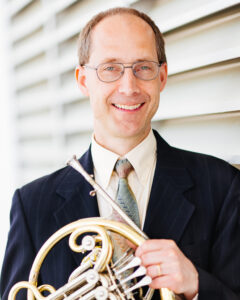
Photo Credit: Steve Wilson
The current system provides four tiers of dues levels that are loosely tied to an orchestra’s base weekly scale at the time of joining the Fund. I say “loosely” because an orchestra has the option of participating at a higher level than it would otherwise qualify for. These dues levels range from $37.50 to $75 annually, in increments of $12.50. The benefits that are payable in the event of a strike, a lockout, or (as of 2023) a declaration of force majeure or similar action are based on a simple formula: No payment the first week, then weekly amounts that are double the annual dues for the next three weeks, quadruple the annual dues for the following six weeks, and six times the annual dues for the subsequent six weeks. While there are no provisions that explicitly grant benefits beyond these 15 weeks, the Fund trustees are empowered to extend the benefits, and have done so on several occasions (e.g., for the Minnesota Orchestra in 2012–13 and the Detroit Symphony Orchestra in 2010–11).
ICSOM’s resolution to amend the bylaws proposes creating five additional tiers of dues/benefits, with annual dues levels from $100 to $200 in $25 increments, and with the same benefit structure that currently exists relative to dues. It also proposes removing the already tenuous link between wage scales and dues.
As I have been in discussion about this proposal with various people across the Federation, I have heard only two concerns with it: What about locals that pay these dues on behalf of orchestra members and that may not be able to afford a dues increase? What will this change do to the fiscal stability of the Fund?
To assuage the first concern, the authors of this proposal made sure that the increases are entirely voluntary and must be approved by a two-thirds majority of the orchestra and, crucially, by the local executive board.
In terms of the fiscal aspect of this change, it is easy to conceive of scenarios that would prove problematic for the Fund (e.g., what if five large orchestras all increase their dues to the highest level, and then all go on strike for 16 weeks?). And while these scenarios are not inconceivable, they are also most unlikely and would be unprecedented.
What is needed is a model that can give us potential outcomes from likely scenarios, and here the technique of Monte Carlo simulations might be helpful. This technique involves assigning probabilities to various inputs, running a simulation in which those inputs are decided by chance (using a random number generator to determine them), recording the outcome, and then repeating a large number of times. The spread of outcomes gives some sense of what is likely to occur.
I created a program to do just that. I assigned each currently participating orchestra an annual strike probability based on its and the Fund’s most recent 33-year history (as far back as I could obtain data). I also incorporated some idea of an economic cycle: Certain years would be considered “hot,” where strikes were more likely and were likely to last longer; other years would be “calm,” where strikes were less likely and tended to be shorter; and other years were “normal,” where these probabilities were unaffected (the duration data were also drawn from the past 33 years). Starting with the Fund balance from 3/31/2008 and running this model forward 18 years produced the spread of hypothetical incomes in the figure below:
The simulation also showed a 4.2% probability of dropping below the $1M threshold (that would automatically have triggered a 50% dues increase) during the 18-year period. Given the current balance of the Fund (as of 12/31/25), this appears to be a reasonable model for Fund performance.
Running the simulation forward 20 years and starting with the Fund’s current balance, I modeled the adoption of higher dues and benefits in four different ways: “Random,” in which every orchestra had a 10% chance of opting for a higher tier; “Probabilistic,” in which the base probability of opting in was increased in a way that was correlated with the strike probability, so orchestras with a relatively high strike probability were quite likely to opt in; “Threshold,” in which orchestras whose strike probability met a certain threshold were the ones that opted in; and “All,” which is self-explanatory. Note that the “Probabilistic” and “Threshold” models directly address the potential adverse selection risk possibility that many have perceived with the resolution.
In addition to modeling whether or not orchestras opted for higher dues, I also needed to model the extent to which they would, i.e., what dues tier they would opt for. Here again there were different scenarios: “Nearest,” in which likelihoods were tilted to the lower of the new tiers, “Uniform,” in which all new tiers were equally likely; and “Farthest,” in which the probabilities were tilted to the high end of the new tiers.
There was a further consideration related to the future of the Fund. In 2023, the convention passed a bylaw amendment that permits benefits to be paid “in the event an employer declares force majeure, asserts impossibility of performance, repudiates the local collective bargaining agreement in its entirety, furloughs musicians, or takes similar action that has the effect of depriving the musicians of all wages guaranteed under their local agreement.” This clause has not yet been invoked, and there is obviously no historical data that can be used to infer probabilities. So, I increased all strike probabilities (which should really be called “benefit payout probabilities”) by 15%, which is a completely arbitrary number.
Lastly, the possibility exists that an orchestra choosing to increase its dues tier might, as a direct result of that choice, be more likely to go on strike, or more likely to stay out on strike for longer (because the increased benefit enables them to—the whole purpose of the Fund). In this simulation, I therefore both increased the strike probability and the likelihood of longer strikes for several years. The section “Unlimited Payout” below shows the results of the simulation:
The average numbers (the median is shown, but in each case, the mean is similar) look reasonable, but the lower tails of some are problematic, particularly the ones we are most concerned about, “Threshold” and “Probabilistic.” Also of concern, the average probability of breaching the $1M floor during the 20 years was as high as 15%.
However, it is important to remember that the historical data about payout durations include some remarkably long payouts. I was not a trustee at the time that those extended payouts were approved, but I imagine that there was considerable discussion amongst the trustees about the effects on the Fund’s finances of approving the extensions.
Taking that into account, the chart below also shows results if the simulation were to limit the payouts to the 15 weeks outlined in the bylaws, in the section “15-Week Payout.”
These results are far more reassuring, as are the results for the probability of breaching the $1M floor.
Subsequent to creating this simulation, I polled the ICSOM orchestras about their likely intentions if the resolution were to pass. Based on that admittedly unscientific sample (the 15 ROPA and OCSM orchestras were not surveyed, and only 21 of the 48 participating ICSOM orchestras responded), the “Random–Uniform” seemed to be the most likely scenario, though the probability of opting in seemed closer to 30% than the 10% figure I had used. Running this particular scenario again, with a 28% probability of opting in to higher tiers, produced an outcome closest to “Random–Farthest.”
While it is impossible to predict the future, I think there is little likelihood that passage of the resolution will lead to fiscal instability of the Fund, particularly if there continue to be trustees who carefully weigh the Fund’s fiscal health in their deliberations.


