








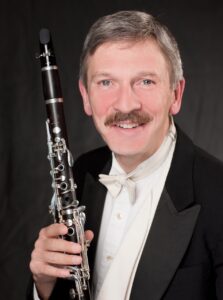
Photo credit: Chris Lee
In 35 years as an orchestral clarinetist, I’ve held contracts with three ICSOM orchestras. Two of those orchestras tragically went bankrupt (the New Orleans Symphony in 1991 and the Syracuse Symphony in 2011). But through the courage, hard work and dedication of my colleagues, both of these orchestras successfully reorganized as musician-run “cooperative” ensembles: The Louisiana Philharmonic and The Syracuse Orchestra. Delegates from other ICSOM orchestras have expressed interest in what we are trying to accomplish in Syracuse, and I’ve been asked to share some of my experiences by comparing traditional versus co-op orchestras.
In good financial times, with good management, the traditional governance model has many advantages. Most of us musicians just want to play our instruments and make beautiful music—and the traditional model allows us to concentrate on our art. Professionally trained staff experts handle marketing, development, operations and financial management. Dedicated volunteers from the community serve on the orchestra’s board, supervising operations while contributing large amounts of time, money and professional expertise to the organization’s success. Musicians, staff and board all have clearly defined roles and responsibilities. This organizational model generally works quite well, and through decades of activity, ICSOM has played a key role in improving musician salaries and working conditions through the collective bargaining process.
But traditional collective bargaining is deliberately adversarial. Negotiating parties sit “across the table” from the “other side” in negotiations. And fraternization between groups is often discouraged during the negotiating period, as both sides try to maintain maximum leverage and seek their own best outcome. When negotiations are conducted honestly and ethically, this adversarial approach helps to focus everyone’s attention on key areas of conflict or disagreement, and to resolve those issues fairly and efficiently.
However, this adversarial style also comes with definite risks. When we perpetually view our negotiating counterparts as some kind of enemy, we can seriously damage long-term relationships with vital partners in our organization. Once sides are chosen and battle lines are drawn, there can be very strong incentives for opposing negotiators to dig in their heels to get the best deal for their side. A lot of energy can be wasted in unproductive gamesmanship surrounding negotiations. The two sides talk past each other, critical information is withheld, or talks bog down over perceived insults or lack of respect. And, looming over everything is the implied “nuclear option” of a devastating work stoppage—a strike called by musicians, or a lockout imposed by management—either of which results in canceled concerts, lost revenue, and a PR nightmare for the organization. Poor communication, mistrust and sheer animosity can become serious problems in themselves.
Just as some creative legal thinkers have worked to establish more productive approaches to litigation like “no-fault divorce” and “restorative justice,” orchestral musicians in New Orleans and Syracuse have tried to re-think the traditional, adversarial negotiating model.
Immediately following the New Orleans Symphony’s bankruptcy in 1991, musicians of the newly-formed Louisiana Philharmonic were forced to start from the ground up with an extreme, pure co-op approach: some of us wore three hats at once—serving as musicians, staff and board members, all at the same time. My colleagues made heroic efforts and demonstrated extraordinary skills: percussionist Lee Beach turned out to be an excellent bookkeeper, while piccolo player Patti Adams revealed her amazing talent in visual arts as she directed our marketing efforts. But this maximal effort and crazy work schedule were unsustainable in the long run (as the orchestra’s treasurer during its third season, I was regularly sleeping in the office).
Over a period of years, we hired professional staff to take over most of the day-to-day administrative work. And after starting with a seven-member musician board, we gradually added community members to the mix, who provided professional wisdom along with strategic ties to the community, and greatly improved our fundraising efforts. 34 years later, LPO musicians still play an active role on the board, but are once again able to devote most of their time to music. And in 2024, they received a Grammy Award!
After playing in New Orleans for 12 seasons, I won a full-time position with the Syracuse Symphony in 2002. I loved the freedom of just playing music again. Unlike New Orleans, I didn’t need to generate complex spreadsheets, or deliver disappointing news about poor ticket sales to my colleagues. (It actually felt great to worry about reeds, again…) But in the wake of the 2008 financial recession, a number of orchestras around the country found themselves in serious financial difficulty. Plagued by large annual deficits and swamped with debt from an underfunded pension plan, the Syracuse Symphony went bankrupt in April of 2011. Much like New Orleans, Syracuse musicians replaced their old, bankrupt orchestra with a new, musician-run, co-op ensemble.
Bankruptcy is emotionally devastating. Musicians with pre-existing medical conditions scrambled to find adequate health insurance. Many of our best musicians left Syracuse to find work elsewhere. But through hard work and personal sacrifice, we kept the orchestra alive, hired a lot of talented new players and generally maintained our orchestra’s artistic standards. A couple of our musicians deserve special praise for taking on extensive staff responsibilities in addition to playing their instruments: Jon Garland (principal horn) also serves as our director of operations, while Kelly Covert (second flute/piccolo) works in development as our special events coordinator.
Like most other orchestras, we continue to face serious financial hurdles, including building our audiences back following the pandemic. But unlike many traditional orchestras, relationships between all stakeholders in our organization remain very strong. Currently, five of our 21 board members are musicians, and musicians have a real voice in all decision making—from programming to long-term planning, to financial management, to our current search for a new music director. Musicians make up a near-majority (and sometimes an actual majority) on the board committees dealing with all these issues. All orchestra musicians are invited to attend our monthly board meetings, and each of us gets access to the exact same financial figures (at the exact same time) as our community board members do. Our smart and energetic executive director, Pam Murchison (a former flutist with the West Virginia Symphony), has earned musicians’ respect through her positive attitude and her openness to frank dialogue and honest discussion. Difficult decisions still need to be made, but there is a real sense of collaboration and mutual trust throughout our organization.
Both New Orleans and Syracuse adopted co-op models out of dire necessity. The co-op approach isn’t perfect, and I certainly wouldn’t recommend it for every orchestra. It’s also important to acknowledge that (in 2026 dollars) musician salaries in both New Orleans and Syracuse are still well below the levels they reached before those orchestras’ respective bankruptcies. But part of the trade-off here may involve balancing “immediate needs” (raising salaries) and “long-term needs” (maintaining job security and the financial stability of the orchestra). I also feel that Louisiana’s musician-run structure gave them some critical flexibility in rebounding from the devastation of Hurricane Katrina, just as Syracuse handled the COVID pandemic more nimbly than a lot of our peer orchestras.
Realistically speaking, there will probably be more tough times ahead, as well: if our economy dips into another financial recession, I know that many orchestras, including ours, may face daunting obstacles. I can’t predict the future, but I’m reassured that everyone in our organization is at least “playing on the same team.” Internal conflicts between management and musicians won’t hamper our efforts to meet the challenges ahead. And that’s one major step in the right direction!
Allan Kolsky plays principal clarinet with The Syracuse Orchestra, and also serves on the orchestra’s Board, Finance Committee, and Music Director Search Committee. He previously played second/e-flat clarinet with the Louisiana Philharmonic, while serving as the orchestra’s treasurer and chair of its Strategic Planning Committee.


